Monday, 22 April 2024

AgriChar team involved in winning article for National Champion of Finland for Frontiers Planet Prize 2024

We have fantastic news to share:  our groundbreaking research on sustainable lake restoration, including recycling of lake sediments to agriculture, has just been crowned National Champion of Finland by the prestigious Frontiers Planet Prize! 🌍✨🏆
 

Our pioneering work introduces a groundbreaking strategy designed to steer our planet back into a safe operational zone, tackling nutrient pollution in our precious lakes head-on. By harnessing cutting-edge, eco-friendly methods that emphasize nutrient recycling, we're not only combating eutrophication but simultaneously striking at the heart of interconnected environmental issues - from curtailing greenhouse gas emissions to preserving biodiversity.


This recognition propels us into the ranks of the 23 National Champions, shining a global spotlight on our efforts in the Planetary Boundaries sustainability science competition. 


Lakes, ensuring food security, the provision of clean water for drinking and irrigation, recreation and biodiversity, have been centers for human life and activities for ages. The provision of these services is, however, dependent on the extent of the water pollution by major nutrients, nitrogen and phosphorus, i.e. eutrophication.

Eutrophication remains a main cause of water quality impairment in lakes globally. It is commonly recognized by unsightly and smelly scums of the blue-green algae (cyanobacteria) on the lake surfaces. These scums can be very toxic (known as harmful algal blooms), causing human health risks and compromising water use for drinking and irrigation. For example, drinking water crisis in Toledo on western Lake Erie (USA) in August 2014 interrupted water supply for about 0.5M people due to the high level of cyanobacterial toxins in finished water. Drinking water crisis in Wuxi (China) in 2007 affected about 4M people. Moreover, degrading blooms lead to oxygen depletion, siltation, massive fish mortality. Further economic losses are caused by high emissions of greenhouse gases (especially, methane) from eutrophic lakes. Over 40% of the world’s lakes (UN, 2021) are impacted. Yet, this value is underestimated, given that water quality remains unmonitored in regions with untreated wastewater. Also, freshwaters have the highest rate of biodiversity decline of all ecosystems. Thus, eutrophication leads to compromised ecosystem service delivery locally and affects economies and social stability globally.

The extent of eutrophication is projected to double in response to climate change and population growth, leading to methane emissions from lakes and reservoirs more than 50% of current fossil fuel emissions. The substantial accumulation of nutrients in watersheds (legacy nutrients) will continue to damage ecological health in lakes for decades to come if left unmanaged. These challenges trigger a need for drastic changes in the existing approaches to eutrophication management.

Sustainable lake restoration is our overarching solution to eutrophication, aiming to improve ecological state while delivering a number of other environmental and socio-economic co-benefits extending beyond the scale of intervention. We are developing numerous tools based on decades of expertise in lake restoration science, in order to reach a synergetic solution that is effective both environmentally and economically and crucially, that supports nutrient recycling, reuse and recovery (circular economy). For example, sediment removal from lakes may decrease nutrient concentrations and cyanobacterial blooms, leading to reduced greenhouse gases emissions, increased amenity and recreation value. At the same time, the sediment removed can be used as a fertilizer, improving situation with non-renewable phosphorus rock (P rock) availability and prices. Very narrow circle of countries control economically reasonably exploitable P stocks, namely Morocco, USA and China, with the latter two having already minimalized the exports. The P rock stocks controlled by Morocco tend to have higher content of cadmium and other heavy metals, but are also affected by the political instability around P-rich Western Sahara (the sole African colony according to UN). The situation with P rock availability and price has only worsened since 2022 with the Russian military aggression on Ukraine and the following sanctions to Russia and Belarus to the point where food security becomes jeopardized globally.

Each lake should be assessed individually to ensure best solution to the lake-specific problems. In general, we promote combined approaches including reduced nutrient inflow from catchments as well as in-lake measures (addressing nutrient release from sediments). We develop and enhance tools enabling to quantify the impacts of different interventions on lake nutrient concentrations, to establish linkage with the potential environmental and socio-economic benefits.

The overarching solution we propose is global in scale, but delivered through a network of local-scale actors. For example, reduction of emissions of greenhouse gases in thousands of individual lakes directly impacts local communities and stakeholders in each case (improved lake ecosystem health), but also contributes directly to carbon cycling on the global scale (reduced emission of greenhouse gases). Individual stories of restoration success at local scale act as beacons and can be communicated regionally and internationally as a showcase for tailoring site-specific solutions. Civil society is not a passive observer in sustainable lake restoration, but rather is actively involved in developing, implementing and benefiting from its solutions. This is an important aspect of the new-generation water quality management strategy. We underline that achieving optimal, sustainable results from lake restoration relies on multidisciplinary research and close interactions between environmental, social, political, and economic sectors. In 2023, the outcomes of our paper were included in a White Paper on Embedding Lakes into the Global Sustainability Agenda to raise awareness on the benefits of sustainable lake management to the global restoration community. This White Paper was launched by the United Nations Environment Programme at the UN Water Conference, New York, 2023 and is being used to inform the implementation of a United Nations Environment Assembly Resolution 5/4 on Sustainable Lake Management (UNEP/EA.5/Res.4), reaching all UN member states. We now work through our international partnership to enable transformative change in this field. Our solution will support Target 2 of the Biodiversity Plan For Life on Earth aiming at restoring 30% of all Degraded Ecosystems by 2030.

By advocating sustainable nutrient management, we are delivering directly to the Planetary Boundaries science (Fig. 1). Lakes is the key model system to demonstrate this approach because nitrogen and phosphorus flows have already transgressed their planetary boundary, lakes are significant source of greenhouse gases emissions and regulate climate, and freshwater has highest rate of biodiversity loss. This is in line with the results of the update on the framework of the Planetary boundaries in 2023 indicating that six of nine boundaries are transgressed and pressure is increasing. Our research helps to design and implement restorative measures for lake ecosystems beyond the control of nutrients and ecological responses, thus, supporting understanding of the interplay between the boundaries. These include sustainability- and use-based benefits (e.g., net zero carbon and socio-economic gains such as food security via sustainable fertilizers), supporting international policy initiatives (e.g., the UN Sustainable Development Goals (SDGs) & Decade on Restoration; European Green Deal & Biodiversity Strategy 2030) that aim to keep the planet within its boundaries. Our research contributes to the understanding of the relationships between ecological processes and wider sustainability indicators, and better integration of circular economy approaches into freshwater management via addressing major knowledge gaps.
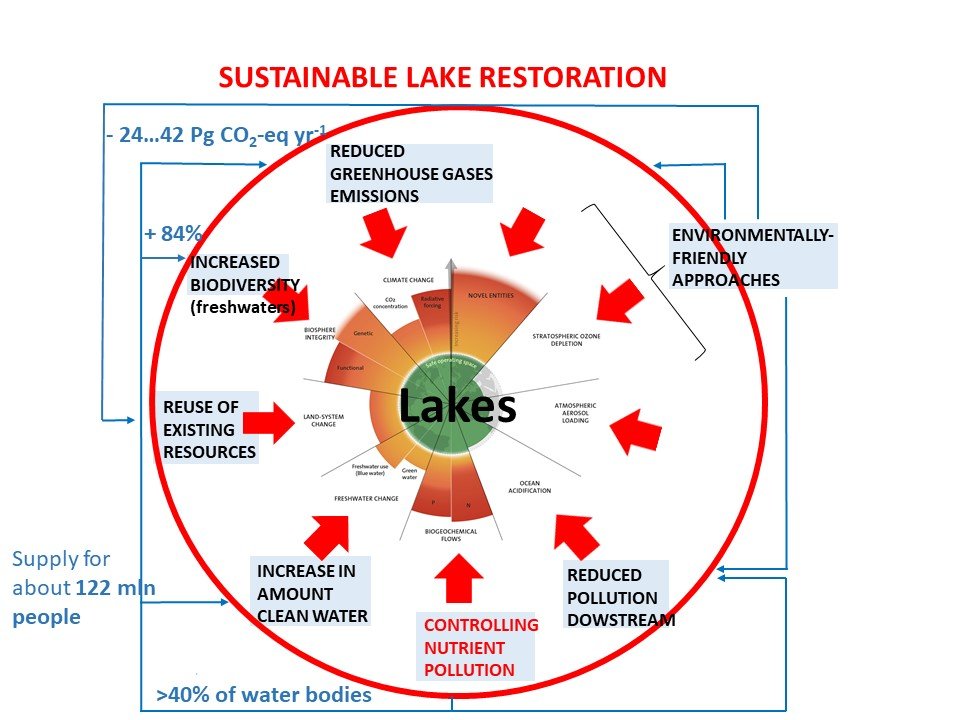
Figure 1. Sustainable lake restoration enables to bring the Planet back to the safe operation space. By controlling nutrient pollution to lakes effectively and with the use of environmentally friendly approaches that support nutrient recycling, reuse and recovery, we address a number of interlinked environmental problems.
 The tendency “towards sustainable lake restoration” is observed in water management actions globally, and a large number of initiatives are already emerging, although rather independently. To promote planetary boundaries science, we aim to improve collaboration between environmental, social, political, and economic sectors by establishing a united platform of sustainable lake restoration practitioners, stakeholders and scientists that integrates all current initiatives and enables monitoring and documenting the outcomes of our solutions, key research developments and lessons learned. We also plan to address essential knowledge gaps of sustainable lake restoration by, for example, establishing best practices for improving sediment P availability for crops and reducing environmental impacts; developing filters that enable to efficiently trap nutrients removed from lakes and are recyclable in agriculture; and quantifying the linkage between reduction of P concentration in lake water and decreasing GHG emissions. Addressing these gaps enables better integration of circular economy approaches into freshwater management, facilitate a wide-scale adoption of new strategies, and hopefully bring us one step closer into sustainable living within planetary boundaries.
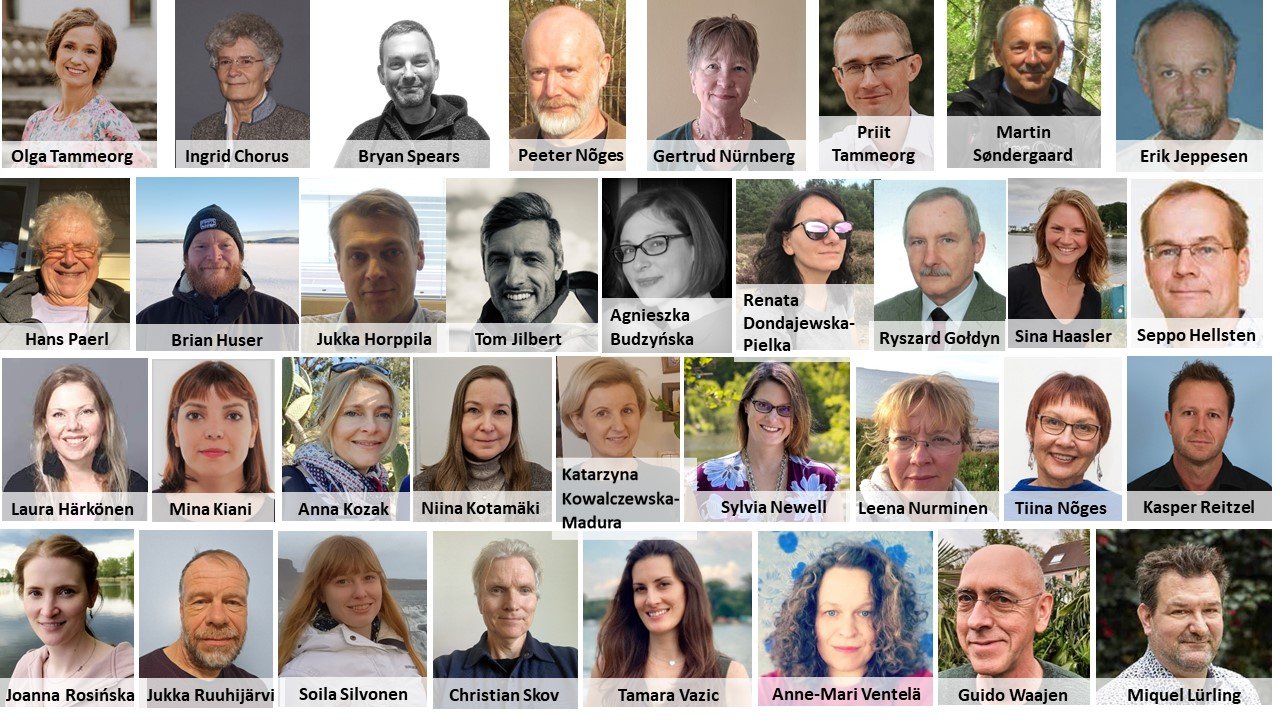
Photo 1. Our team exploring sustainable lake restoration and delivering to the planetary boundaries science.


Saturday, 23 December 2023

Winter meetings before holidays in 2023

Winter arrived early this year in Finland, painting our landscape with a picturesque layer of snow and plunging temperatures. Over the past months, our dedicated team has been immersed in laboratory research, delving into the impact of variously activated biochars on barley yield formation, earthworms, greenhouse gas emissions, and, most recently, nutrient uptake of crops. 

Amid active data collection, we're diligently engaged in the ongoing tasks of data analysis and reporting, covering a broad spectrum of topics in sustainable agriculture. From recycling industrial sidestreams as fertilizers (with a keen eye on their long-term effects on soil fungal communities) to crafting best practices for cultivating cranberries sustainably, our pursuits are diverse and impactful.


The Winter Meetings of the AgriChar research group in December provided a valuable opportunity to reconnect and discuss the progress of our various projects. A heartfelt thank you to all AgriChar members and partners for making 2023 an amazing year. As we pause for the winter holidays, let's recharge our spirits and gear up to enter 2024 with steadfast enthusiasm! Special thanks to Camille Michel from UniLaSalle who returned back to France today!


Thursday, 5 October 2023

Viikki biochar experiments harvested and sampled for 2023, including earthworms!

Today we have finally completed the sampling campaign for growing season 2023 in our long-term agricultural biochar experiments in Viikki, Helsinki. The growing season was challenging once again with extreme droughts in May and June, and quite some rains in August-September, but once we got the yields collected, we were happy and concluded that the harvesting was, as usual, lots of fun. We are very lucky to have Camille Michel from UniLaSalle, France as a visiting student to help with all the sampling campaigns and later in autumn, with lab work!

After the harvest, we took soil samples of different kinds to see the effects of differently activated biochars on soil carbon, bacteria and fungi, available nutrients but also on water retention curve, greenhouse gas emissions and mineral nitrogen content. All this is part of Samuel Amoah's doctoral thesis.

For the first time since 2015, we also looked into the effects of biochar and fertilizer treatments on earthworms. This is part of the research of our group member Zannatul Ferdous and we were glad this time we had the chance to perform the sampling during rainy days with class: Department of Agricultural Sciences supported us with a brand-new tent for field sampling! Earthworm sampling was completed much quicker than anticipated thanks to motivated team by Zannatul, Camille and also our newest group member, visiting researcher Sharifa Nabavi from Iran. But for the first sampling day, many more AgriChar members gathered to the field for enjoying the good company and learning tips and tricks about earthworm research from Jure. Thanks to all for the nice moments on fields and let's now focus on the lab work. Looking forward for the results!


Sunday, 9 July 2023

Added value of activating already-premium-grade biochars? First results from dry spring 2023 promising!

 The production technology of biochars has developed a lot since the beginning of our biochar journey in 2010 (for example, nowadays the dry bulk density of biochars tends to be in the range of only 100 kg per m3!) and we were wondering, whether there is any added value of activating and nutrient-enriching already-high-quality biochars before field application or not. We were also wondering, how can we practically arrange such activation process for large amounts needed for field experiments? 

In spring 2023, as part of the doctoral research of Samuel Amoah, we did the large-scale biochar activation and applied the differently activated biochars to our long-term field experiments in Helsinki. The days were long (and ended often in moonshine) but thanks to the great teamwork we were able to successfully complete the two-phase activation process (acid treatment+nitrogen enrichment) on time, apply the biochars to the fields and start the measurement campaigns of greenhouse gas emissions, soil moisture and barley growth. This project is supported by Tiina and Antti Herlin Foundation, Olvi foundation and AGFOREE doctoral school of University of Helsinki.

The measurement season naturally included also soil and plant sampling, and also some first tests on the quality of the biochars used. We were happy to have two visiting doctoral researchers, Mohammad Ghorbani and Elnaz Amirahmadi, to join us for May and June, in addition to our fresh MSc students Zannatul Ferdous and  Tatu Puttonen.

In spring 2023, University of Helsinki AgriChar research group activated biochars in large scale and studied the effects of these biochars on soils and plants

The month of June was extremely dry and hot for the growing season 2023 in Southern Finland and Estonia, where our field experiments are running. This meant that the emergence, tillering and growth of barley was not even and at times, growth even stunted. Such hot and dry conditions, however, are suitable for experimental purposes to see if the activation treatments were able to improve the effects of already highest-grade spruce biochars on soil water retention. 

 We were stunned to see very clear benefits of biochar activation on first biomass yields, actually even doubling the biomass yield compared to control- whereas in water-only activated biochars there were no improvements of barley biomass yield and the fertilizer effects were clear. It seems that the added nitrogen in such nutrient enrichment practices can have a strong effect, even to the extent that the added granular fertilizer effect was left redundant and activated biochar alone was enough for sustaining higher yields. We are looking forward for longer-term effects of such activated biochars, please stay tuned for updates.


Wednesday, 21 June 2023

The ground-breaking doctoral thesis of Mina Kiani received the highest grade, distinction!

Recently the Faculty Council of the Faculty of Agriculture and Forestry, University of Helsinki, decided to afford the pioneering doctoral thesis of Mina Kiani the highest grade, pass with distinction. We are very happy for such a high recognition to our work!

Mina's doctoral thesis "Closing the phosphorus cycle by recycling lake sediments in agriculture" data collection work started in 2017 under the supervision of Dr. Priit Tammeorg, Dr. Olga Tammeorg, Dr. Asko Simojoki and Dr. Petri Penttinen.  The work came to the grande finale on 21 April 2023 with the public defense where Professor Giancarlo Renella, University of Padua, served as the opponent. We enjoyed very much the discussions, both before, during and after the defense, with Prof. Renella sharing his insights to (history of) soil science but also with his latest experiences with biochars and sediments in Italy.

In this work, Dr. Mina Kiani found a sustainable solution for closing the leaking agricultural #phosphorus (P) cycle by #recycling P-rich lake #sediments back to the agriculture. It is globally the first study covering the effects of lake sediment recycling both to lake and to the plants on the shore of the lake over four-year field experiment. What is more, first time ever also the environmental aspects of recycling lake sediments to agriculture were reported over several years. 


Mina Kiani's doctoral theis was graded with Pass with distinction


We learned that the sediment-based growing media sustained grass biomass yield in the field condition, even though yield enhancement in field experiment was less obvious compared with our previous lysimeter experiment. Sediment from Lake Mustijärv was rich in organic matter and was a good source of several essential nutrients, including P, in plant-available form. In addition to P, the sediment had high solubility of essential plant nutrients including sulfur (S), calcium (Ca), magnesium (Mg), boron (B), zinc (Zn), and a fair supply of copper (Cu). Also, the sediment continuously provided a moderate supply of N to the plants over the four-year field experiment, which was likely due to mineralization of the organic reserves of the sediment.

Considering the environmental impacts, the sediment-based growing media had higher carbon dioxide (CO2) emissions yet broadly similar nitrous oxide (N2O) emissions compared with the soil surrounding the lake. Also, applying a thick layer of excavated sediment (~2000 t ha−1) increased the risk of P and mineral N leaching. The application of biochar increased the amount of N taken up by the plants but did not significantly reduce emissions or leaching.

In addition, sediment-based growing media had different bacterial and fungal community compositions compared with soil. This could result in different mineralization pathways in soil and sediment-based treatments. The bacterial phyla associated with solubilizing P, including Proteobacteria and Chloroflexi, were more abundant in the sediment material than in Soil. This is while the relative abundances of Actinobacteria and Planctomycetes, with the potential to accumulate bioavailable P fractions, were higher in Soil. 

We wish Mina all the best for her career in science and beyond, currently she works for the Natural Resources Institute Finland and continues the ongoing work in AgriChar group as a visiting post-doctoral researcher.


Friday, 19 May 2023

Two fresh publications: Finnish Biochar Guide and new review on biochar as a carrier for beneficial microbes

 We are happy to share that the first ever Finnish  Biochar Guidebook has been published, it is free to download from VYL website! Great teamwork Anu Riikonen Annakaisa Elo Marleena Hagner,  Aino Kainulainen, Kirsi Kuoppamäki, Pirjo Laulumaa, Aki Männistö, Aino-Kaisa Nuotio, Esko Salo, Kari Tiilikkala!

Ensimmäinen Suomen #Biohiili opas julkaistu: Viher- ja ympäristösuunnitteluun, -rakentamiseen ja kunnossapitoon suunnattu biohiiliopas kokoaa yhteen ajankohtaista ja käytännönläheistä tietoa biohiilestä, sen tuotannosta, hyödyistä, ominaisuuksista ja toiminnasta osana maaperää viheralan näkökulmasta. Lataa omaasi:
VYL sivut.


Did you know that #biochar makes a promising carrier for beneficial #microbes? The use of biochar as a carrier of microbial inoculum has been shown to enhance the persistence, survival and colonization of inoculated microbes in soil and plant roots, which play a crucial role in soil biochemical processes, nutrient and carbon cycling, and #soil contamination remediation. Moreover, biochar-based microbial inoculants including probiotics effectively promote plant growth and remediate soil contaminated with organic pollutants. 


https://ars.els-cdn.com/content/image/1-s2.0-S0048969723025895-ga1.jpgOur fresh review study on this is out now, open access! Check it out: The potential of biochar as a microbial carrier for agricultural and environmental applications

Monday, 17 April 2023

Welcome to public defense of Mina Kiani, lake sediments are promising fertilizers!

Mina Kiani, M.Sc. will defend the doctoral dissertation entitled "Closing the phosphorus cycle by recycling lake sediments in agriculture" in the Faculty of Agriculture and Forestry, University of Helsinki, on 21 April 2023 at 12:00. The public examination will take place at the following address: Walter Hall, EE-Building, Agnes Sjöberginkatu 2, Helsinki. Full professor Giancarlo Renella, University of Padua, will serve as the opponent, and Priit Tammeorg as the custos. The dissertation is also available in electronic form in Helda.


Mina and colleagues enjoying the data collection back in 2017


Prof. Renella will also deliver a seminar on Potential and limitations of dredged sediment application in agriculture: projects outcome and perspectives on Thursday 20th April.

Time: 1:15pm to 2pm.

Location: Sali K110 (Is1), C-Building.

Warm welcome!