Saturday, 10 June 2017

The 2017 field season has started for biochar experiments

AgriChar research group has been working especially hard the past month to get started this years field experiments.

This year we are involved in seven (!) field experiments! Starting from the two long-term experiments in Viikki (one has just entered into its eight growing season!) to several new experiments in Finland and Estonia. One especially intriguing case study in Estonia focuses on the environmentally best practice for recycling nutrients from eutrophicated waterbodies.

Our people are involved also in HYKERRYS project that includes four new field experiments in Southern Finland and there also other soil amendment materials than biochar are being tested. The peas in the long-term Viikki experiments looked happy on 9th of June (see below). Let's see, if the promising trends first time noticed in the seventh growing season, where peas seemed to benefit from biochar more than other crops, will get stronger!

The growing season 2017 has started!

Wednesday, 3 May 2017

Welcome to the biochar session in 22nd International Conference on Environmental Indicators, 1-5 August 2017 in Helsinki, Finland!

Dear biochar friends,

It is my pleasure to invite you to participate the  22nd International Conference on Environmental Indicators, 1-5 August 2017 in Helsinki, Finland!


Check out the intriguing conference programme and submit you abstract to one of the various special sessions by May 15!


Looking forward to see you there!


Kind regards,
Priit


To view this email as a web page, click here
http://lp.kenes.com/rs/305-QUK-519/images/ICEI17_header.png
BE A PRESENTER
Participants interested in presenting a poster or oral presentation at ICEI 2017 are invited to submit their abstracts online. We look forward to receiving your crucial research that will contribute to the first-class scientific program and be published in the ISEI Journal: Journal of Environmental Indicators.
http://lp.kenes.com/rs/305-QUK-519/images/ICEI_submit_abstract_button.jpg

http://lp.kenes.com/rs/305-QUK-519/images/ICEI_topic3.jpg

http://lp.kenes.com/rs/305-QUK-519/images/ICEI_topic2.jpg

A GLOBAL PROGRAM
Working in collaboration with the Local Organizing Committee, the International Scientific Advisory Committee will ensure a truly global approach to the discussions of significant new developments, overall views and scientific advancements.
http://lp.kenes.com/rs/305-QUK-519/images/ICEI_THE-COMMITTEE-MEMBERS.jpg

SPECIAL SYMPOSIUM
One of the special program sessions is the Sustainable Agriculture Symposium which will be held at the Helsinki University Viikki campus. The symposium will include topics such as biofortified agriculture and a discussion on the topic "Food Crisis is Soil Crisis".
http://lp.kenes.com/rs/305-QUK-519/images/ICEI_MORE-PROGRAM.jpg

http://lp.kenes.com/rs/305-QUK-519/images/ICEI_topic1.jpg


http://lp.kenes.com/rs/305-QUK-519/images/ICEI17_white_logo.png
© ICEI 2017 - Kenes Group Ltd. All Rights Reserved

Monday, 3 April 2017

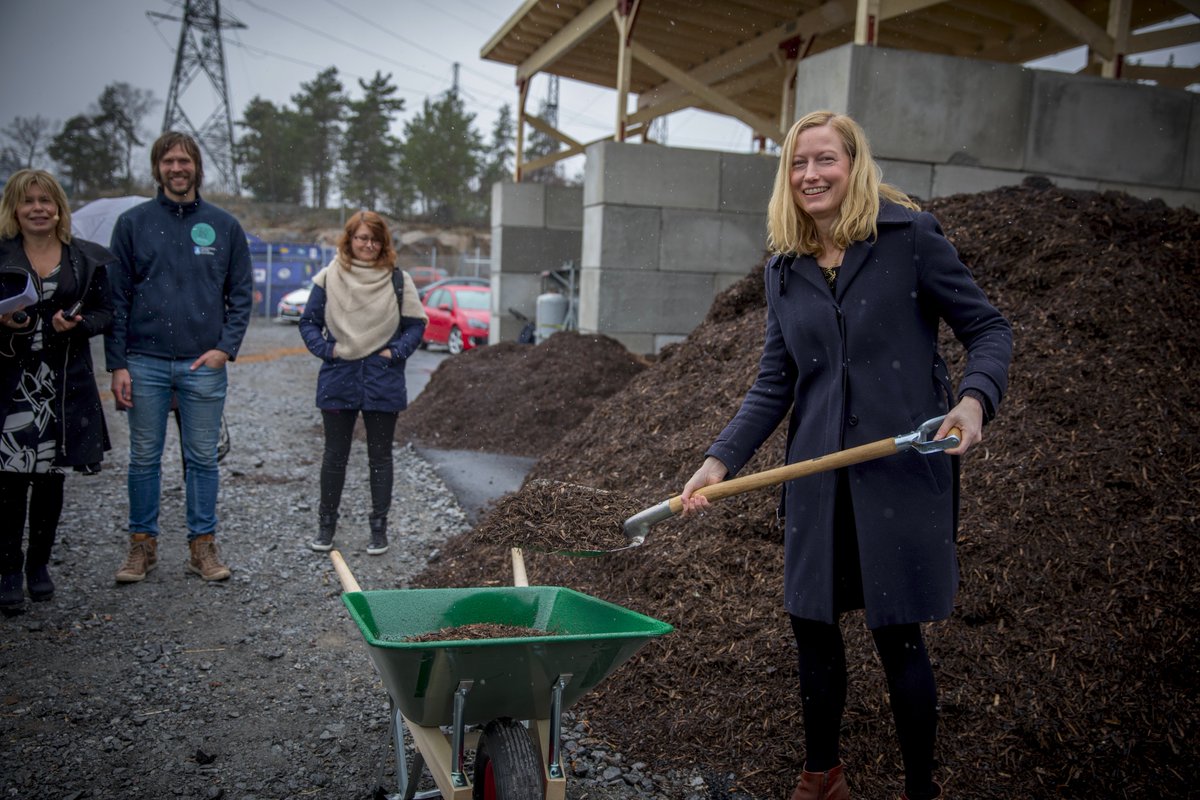
The first biochar plant of City of Stockholm up and running!

Last week some great news came in: finally the Pyreg plant of Stockholm is operational!

A first-of-its-kind project, the facility turns plant waste from parks and homes – everything from grass clippings to trees and limbs – into carbon-capturing charcoal that residents can then use in their window boxes and gardens to promote plant growth. Biochar is a powerful soil conditioner, it decreases carbon-dioxide levels in the atmosphere and, through its production, it will even create enough energy to provide heat and hot water for more than 80 apartments in the city.

The facility opened on March 29th is the first of five planned as part of the Stockholm Biochar Project, a Bloomberg Philanthropies’ Mayors Challenge winning entry from 2014. Together, the five plants are expected to produce 7,000 tons of biochar over the next three years – sequestering enough carbon to take the equivalent of 3,500 cars off Stockholm’s streets.

As the biochar pioneer of Stockholm, tree officer Björn Embrén commented: "despite the extreme complications, such as choosing the location for biochar production, the benefits are so great that the process was worth the hassle. Even if you have to think twice to find solutions for your challenges – and this slows down the project – the ends make it worth it."

See more: https://www.bloomberg.org/blog/stockholm-biochar-project-mayors-challenge-winner-opens-first-plant/
http://www.stockholmvattenochavfall.se/avfall-och-atervinning/utvecklingsprojekt/biokol/
https://www.bbhub.io/dotorg/sites/2/2017/03/Replicating-in-Stockholm.pdf

The AgriChar research group congratulates Stockholm for this milestone step and hopes we soon see mushrooming of biochar projects in different municipalities! 

The below photos are from Bloomberg and City of Stockholm PR feeds. People seem quite happy to get things going, but as you see here, several  obstacles about building permits etc. challenged the team.


Sunday, 19 March 2017

1st Finnish Biochar Workshop and founding of the Finnish Biochar Association

The 1st Finnish Biochar Workshop was successfully held yesterday, 18 March, in a beautiful ecovillage in Siuntio and we also founded the Finnish Biochar Association. The AgriChar research group was well represented in both activities. 

Participants of the 1st Finnish Biochar Workshop.

Suomen Biohiiliseura or The Finnish Biochar Association will soon be registered, but until the end of March everyone who couldn't attend the workshop can still join as founding members. The website for the SBS or FBA is already under construction, check it out: http://www.suomenbiohiili.info

In the workshop (first in the series of the FBA activities), we tested three different conical kilns designed by Innovaatiopalvelu Koivukunnas. The most original one of these was the one where a barrel was tightly united beneath the kiln so the ready biochar fell into the barrel. As the barrel did not get too hot we even tried it on the lake ice! This might be the first time of modern biochar history to produce biochar on a waterbody- that could be the way for in situ pyrolysing reed from the lakes!
Pyrolysis on the lake ice.

Saturday, 18 February 2017

1st Finnish Biochar Workshop and discussions on starting a Finnish/Nordic Biochar Society

Dear biochar friends,

After the 3rd Finnish Biochar Seminar three months ago, several follow-up discussions have been held and it seems that the time is right for starting a Finnish Biochar Society. As people from BSAG expressed their interest also in pyrolysis as possible tool for recycling nutrients from waterbodies, we decided to hold an informal get-together, the 1st Finnish Biochar Workshop, in a beautiful ecovillage near Helsinki, on Saturday, 18 March 2017, starting 11 AM.

The goal is to try there hands-on pyrolyzing reed and forestry residues with small-scale conical kilns and have a nice chat over a cup of tea about setting up a Biochar Society, be it Finnish or Nordic.

To plan the practicalities of the event, please fill in the registration form by 15 March the latest.

Please circulate the invitation wide and far! Everyone is welcome!

Kind regards,
Priit
On behalf of the organizing team

Wednesday, 14 December 2016

First chapter from EU COST Action "Biochar" final publication published!


Recently, several milestone publications of biochar have been published, among others, the second issue of "Biochar for Environmental Management" (2015) and this year, "Biochar in European Soils and Agriculture" (2016). Now we are happy to announce that the first chapter of the final publication of the EU COST Action "Biochar as option for sustainable resource management" (2017) is just today published in the journal Journal of Environmental Engineering and Landscape Management.


In the first chapter, Biochars in soils: towards the required level of scientific understanding by Priit Tammeorg and 32 co-authors, we identified key priorities in biochar research for future guidance of sustainable policy development . The current level of scientific understanding (LOSU) regarding the consequences of biochar application to soil were explored. Five broad thematic areas of biochar research were addressed: soil biodiversity and ecotoxicology, soil organic matter and greenhouse gas (GHG) emissions, soil physical properties, nutrient cycles and crop production, and soil remediation. The highest future research priorities regarding biochar’s effects in soils were: functional redundancy within soil microbial communities, bioavailability of biochar’s contaminants to soil biota, soil organic matter stability, GHG emissions, soil formation, soil hydrology, nutrient cycling due to microbial priming as well as altered rhizosphere ecology, and soil pH buffering capacity. Methodological and other constraints to achieve the required LOSU are discussed and options for efficient progress of biochar research and sustainable application to soil are presented. This, as well as the forthcoming chapters in that final publication of the COST action will be Open Access, so free to download and distribute!

Friday, 14 October 2016

3rd Finnish Biochar Seminar


The 3rd Finnish Biochar Seminar was successfully held in Viikki, Helsinki, on 25 November 2016!

Many thanks for all the participants and to City of Helsinki for the support!

See the proceedings here:
3rd Finnish Biochar Seminar

Thursday, 21 April 2016

The city of Stockholm pioneers in the biochar use and production


Last August I had chance to visit the city of Stockholm and hear about their biochar efforts. It is really impressive what they have succeeded within past five years or so, much thanks to the enthusiasm of Mr. Björn Embrén from City of Stockholm’s Landscaping Department.

It all started more than 15 years ago, when Björn noticed that trees perform poorly in compacted urban soils. It was costly to plant trees, fertilize and take care of them- and if they were not doing well, they had no landscaping value and they had to be replaced. On the other hand, there were trees growing on sides of rock walls or on top of old chimneys, where rarely any soil existed- so it was not soil that the roots needed but effective aeration (CO2 away and oxygen to the roots), moisture and nutrients.

They then started experimenting with structural soils, a planting holes with a layer of big, 3-7 cm diameter rocks in the bottom and soil washed between the rocks.

This was a success, and as the next step, in 2009, they switched to using biochar instead of soil for all of their urban tree planting projects. They have found that the main advantage of biochar for urban tree projects over other soil amendments is that it resists compression and compaction.  The crushed stones and biochar mix results in an improved porosity in the soil (roughly 40%).  Increased porosity facilitates better gas exchange, permeability leading to improved root penetration.

Schematics from Björn Embrén.


A further improvement on their methods has been to have the biochar and stones delivered pre-mixed.  They have found that this saves up to 25% in time and labour costs.  The preferred biochar particle size of the biochar is between 1 – 10 mm and currently they recommend approximately 2.25 cubic meters of biochar   for each urban tree (likely mixed with rocks already, but still quite a lot!).  This explains why loads of biochar from Europe have been shipped to Stockholm, mostly from Germany but also from  RPK Hiili OY (Mikkeli, Finland).

In order to be truly sustainable, however, a goal of using locally produced biochar from underutilized biomass was set. To attain this goal the City of Stockholm initiated the Stockholm Biochar Project with the objective of producing both biochar and renewable energy using urban green waste collected from municipal parks as well as city residents.  This particular biomass is often difficult to dispose of and very much underutilized.
The Stockholm Biochar Project team succeeded in winning one of the five coveted prizes of the 2014 Mayors Challenge funded by Bloomberg Philanthropies and the EUROCITIES organization which netted them 1 million euros to be used to set up their initial pilot plant.

We visited the plant last summer and according to latest news in the Biochar journal, it will produce its first tons of biochar within a few months from now, in summer 2016! The pilot plant will start from producing 300 tonnes of biochar per year and at full scale, will reach 1,500 tonnes per year. The heat generated during production will be added to a local or district heating network. Biochar will be used both by city residents and by city landscapers in public parks and urban tree beds. Probably we will soon see many other cities following the example and getting their green waste recycled, carbon fixed and trees happy!

Read more and see images at: https://www.biochar-journal.org/en/ct/77-Planting-Urban-Trees-with-Biochar